
Maine, the latest state to allow charter schools, is wrestling with familiar questions about how those schools can co-exist with regular public districts—and how to manage the growth of the independent school sector to meet demand across the mostly rural state.
State lawmakers and Republican Gov. Paul R. LePage last year approved legislation that paves the way for cautious charter school expansion, allowing just 10 state-approved schools to open over the next decade. No such limits were placed on local school boards approving charters.
Two charter schools have been approved and opened so far, with two others having been given conditional approval and eight others under consideration. The relatively strong interest has led some supporters of the original law, including state education Commissioner Stephen Bowen, to say the state should already consider lifting the cap.
Questions about whether the state is moving too slowly or too quickly surfaced earlier this year, when Gov. LePage accused members of the state’s newly formed charter school commission of dragging their feet in reviewing applications for virtual schools.
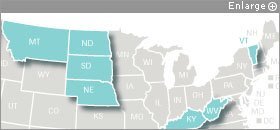
When Maine decided to allow charter schools in 2011, it left just nine states, most of them relatively rural, that bar those schools. One of those states, Washington, will allow the public to vote Nov. 6 on whether to lift its ban.
But Jana Lapoint, the chairwoman of the commission, said members of the panel were wary of repeating the mistakes of other states that allowed poorly conceived charters, including virtual schools, to open, only to see them founder later.
“We’re really holding their feet to the fire before they open,” Ms. Lapoint said in an interview. “We’re asking a lot. We don’t want to close a school in two years, or in five years.”
Maine was the 41st state in the country to approve charters for a reason, Ms. Lapoint added. Many residents and policymakers remain skeptical of the movement. Backers of charters—Ms. Lapoint is one of them—should favor having state officials take a methodical approach to judging new schools, she said.
“There are many people out there ready to throw darts at us as a commission if anything goes wrong,” she said.
Logjam Broken
Efforts to establish charter schools in Maine failed to gain political traction until last year, the first session that followed the GOP taking control of both chambers of the Statehouse in Augusta the previous election. The charter schools law was approved with strong Republican backing.
The law established a seven-person charter school commission. Three of its members also serve on the state board of education, and those three members nominate four others from the public to the panel. The commission drew the governor’s wrath earlier this year when it voted to delay consideration of virtual charter schools, after citing problems with financial and academic oversight of those online programs in other states and calling for more time to evaluate the schools’ merits.
Mr. LePage, in a strongly worded June letter, argued that virtual education had shown results in other states and was already being used by many Maine students, particularly homeschoolers.
“If any members of the commission are not up to meeting the state’s expectations, I urge their resignation,” wrote Mr. LePage, who added: “Your work is critical to many students, so I strongly encourage you to complete your work promptly.”
But the commission was unmoved. Ms. Lapoint noted that Maine’s charter school law forbids for-profit companies from operating charter schools, though nonprofits can contract with for-profits to provide education or management services. But Ms. Lapoint said the commission feared that the governing boards of the proposed virtual charters would not act independently of the for-profit companies they hired to help them.
The eight pending proposals before the commission include a pitch to create the Maine Virtual Academy, which would contract with K12 Inc., a major, nationwide for-profit company based in Herndon, Va., to provide management and other services. (K12 spokesman Jeff Kwitowski said in an e-mail that the company respects school boards’ “independence and autonomy” and expects them to “establish the policies and direction” of the school.)
The two charter schools approved by the commission so far serve very different populations. The Cornville Regional Charter School, located in a rural community in the central part of the state, is an elementary school that emphasizes personalized learning, physical activity, and schoolwide projects. It opened on the site of a traditional public school that closed a few years before. Students have come from six different districts, some as far as 20 miles away, said Justin Belanger, the school’s executive director.
“We wanted to focus on what works in education,” Mr. Belanger said. “We made a bigger and better school. We’re doing more than just replacing the old school.”
Boosting Motivation
The other charter school, the Maine Academy of Natural Sciences, in Hinkley, seeks to appeal to students who have not been motivated by their academic experiences in traditional school settings. The school’s curriculum emphasizes project-based learning across science and agriculture.
The academy serves 47 students who come from 27 school districts around Maine, the majority of whom live on the school’s campus during the week, said Glenn Cummings, the school’s president. Mr. Cummings is a former Democratic Speaker of the House in Maine, who also served in the Obama administration as deputy assistant secretary in the U.S. Department of Education.
Olivia Broadrick, 17, left a high school in her hometown of York, two hours away, to attend the academy. She now drives to and from her new school at the beginning and end of each week.
The teenager, who is considering studying forestry or wildlife rehabilitation in college, has taken on projects such as building a chicken coop on campus, which included an incubator, with the help of a carpenter and an AmeriCorps volunteer. She says she integrated her work on the project into her science and English classes.
“I adored my old school,” Ms. Broadrick explained. “It’s nothing negative about it. There’s just something inspiring here.”
Funding Concerns
Maine charter schools are funded based on the number of students they serve. Even at this early stage, some districts are reporting substantial losses of funding as students leave their systems for charters.
The Regional School Unit 54 has lost 50 students to the state’s two approved charter schools, most of them to the Cornville school, said Brent Colbry, the superintendent of the 2,800-student district, which has a budget of about $31 million.
Those outward migrations have cost the school system about $430,000, said Mr. Colbry. Most district expenses have not fallen, he said, and so the school is trying to cut costs in other ways, such as by imposing a spending freeze and leaving job openings in teaching and other areas unfilled.
“We’ve tried to be good soldiers,” said Mr. Colbry, who has been working in public schools for nearly 40 years. The passage of the charter law, he said, is “clearly one of the most dramatic things to ever happen to education in Maine.”
The state’s education commissioner, Mr. Bowen, said the law has the potential to benefit students across the state by offering them specialized academic services and other attributes. He said traditional public schools’ losses of students and funding reflected families’ desire to seek a better option.
“If the instant you give students a choice, they pack up and leave the school, ... I don’t know if the presence of a charter school is the biggest problem,” Mr. Bowen said. “Somehow, [the charter] is doing something different.”
Given that the number of charters under review by the commission would put the state at its cap, Mr. Bowen said he is likely to ask legislators to consider lifting it. The 10-school limit was a “number pulled out of the air,” Mr. Bowen said. “There’s nothing magical about it.”
Others are skeptical of ramping up charter school growth so soon. State Sen. Justin Alfond, a Democrat who opposed the law, questioned whether charters that attempt to open in more rural parts of the state will be sustainable, given the limited number of students available for recruitment.
“We have two charters that have opened in Maine,” Mr. Alfond said. “The state needs to slow down and start watching how well these charters are doing before we start expanding.”


