The federal Race to the Top initiative has empowered teachers’ union presidents as brokers of education policy. States that apply for the competitive grants hold an advantage if they secure their local unions’ endorsement. In the first round of submissions, some presidents signed on, while others refused.
Endorsement is only the first step, however, in a long, precarious path to change. Moving from ideas to implemented programs will present an unprecedented leadership challenge for local union presidents. To be effective, they will have to bridge a deep divide between two generations of teachers, each with a different history and a different set of expectations for their union.
The Philadelphia Federation of Teachers, widely viewed as a very traditional union, was one of those that did endorse its state’s Race to the Top proposals. Then, the same week as the grants-application deadline, Philadelphia teachers settled a contract that included several notable reforms: performance pay, peer assistance and review, and plans to restaff failing schools. A meeting to ratify the agreement was marked by contentious debate, however, with the contract eventually ratified after a close voice vote and subsequent paper ballot.
The union’s president, Jerry Jordan, praised the agreement, saying that it “goes a long way toward professionalizing the profession.” Dissatisfied teachers felt otherwise, decrying what they saw as a betrayal of union principles, and charging that the election had been rigged.
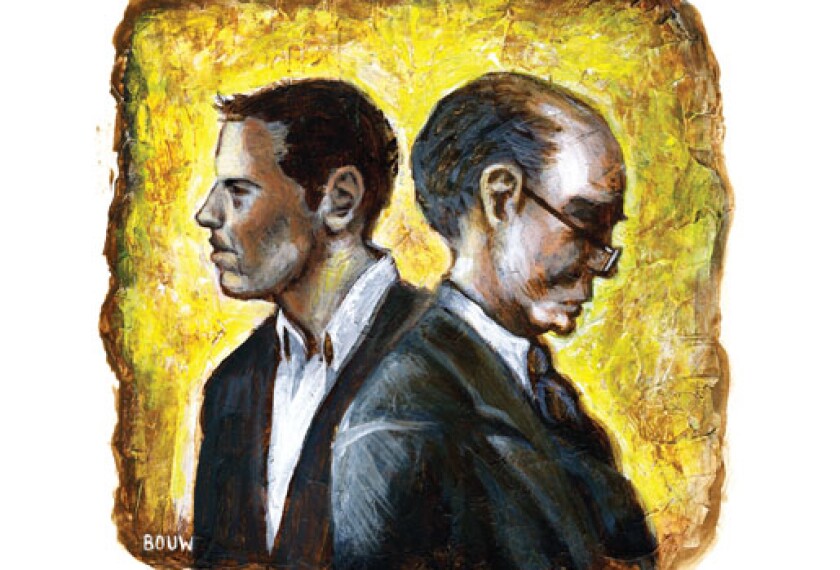
The events in Philadelphia are likely to be replayed in districts across the nation, as local teachers’ unions decide whether and how to translate the Race to the Top proposals into contract language and programs that work. Their debates, sure to be heated and prolonged, will reveal telling differences between the unions’ two large cohorts of veteran and new teachers.
Many of the veterans began their careers in the late 1960s and early 1970s, when few professional careers were open to women and to men of color, teaching’s traditional recruits. The schools they entered after certification were organized like egg crates, leaving them autonomous and isolated in their work. Not surprisingly, as these veterans now move toward retirement, few are eager for reforms such as prescribed curricula, performance pay, or reconstituted schools, which would fundamentally change their work, pay, or job security.
Union presidents cannot be expected to ‘deliver’ their unions. Instead, they must build understanding, trust, and strength within their memberships."
By contrast, early-career teachers have chosen to teach in a labor market in which all careers are open to them. Public education has to compete for their talent. Unlike the veterans they are replacing, many of these new teachers don’t expect to be in the classroom for a lifetime, planning instead to pursue several careers in sequence. In fact, 39 percent of new teachers today have already worked for a substantial period of time in another field, nearly double the percentage of 25 years ago. Having participated in teams throughout their schooling and prior work, early-career teachers report dreading the prospect of professional isolation, and hope for the active engagement and support of their colleagues. Standards-based accountability is the only context they have known, and although they don’t agree with all its features, they accept it and want to succeed in it.
These two groups also view unions differently. Many veterans can readily recall their unions’ struggles to win bargaining rights and basic protections. Some may still remember who crossed the picket lines during early strikes. They know the history of key contract provisions and worry that earlier gains might be forfeited. As they approach retirement, they expect the union to make their salary a priority, since it will determine their pension.
Early-career teachers’ commitment to the union is tentative at best. Many are not even sure they need a union. Frequently, they say that the uniform pay and standardized practices embodied in contracts limit individual initiative and reinforce mediocre performance. They especially resent paying dues to an organization that they suspect defends poor teachers. They want instructional support, accept the possibility of performance-based pay, and seek differentiated roles that allow them to extend their influence beyond the classroom. Ironically, they seem to take the contract for granted.
This new configuration challenges the very concept of unionism. Organizations that have traditionally embodied a single set of shared principles and priorities now find their leaders struggling to reconcile divided constituencies. Virtually every one of the 30 local union presidents my colleagues and I interviewed in a recent study spoke of this leadership challenge. As one explained, “We’re running a couple of parallel organizations.”
These presidents know that they have to rely on their veteran teachers’ commitment to chair committees and keep things running. Yet they also know that the future of their organizations depends on engaging newer members. Somehow, today’s union presidents must bridge the interests of these two powerful groups and draw upon the strengths of each.
Many presidents we interviewed said they favored more-progressive practices, but could not move ahead without their members’ support. The veteran teachers, who make their views known and who vote, tend to oppose the very reforms that new teachers favor. And experience has shown that presidents risk losing elections if they “get too far out in front” of their voting members, as the local leaders indicated.
Because of this, the presidents in our study work hard to recruit new teachers and engage them in union work. They mount intensive, person-to-person membership campaigns and sponsor induction programs and professional-development workshops. In an organization that tends to respect seniority advancement, they often try to accelerate the advancement of less-experienced members into leadership positions. They also rely on technology to communicate with members, and promote practices such as online voting to ensure that new teachers won’t miss key ballots.
Most important, these local union presidents told us of trying to advance an expanded agenda that reaches well beyond conventional union priorities. They continue to push for better salaries, benefits, and working conditions for their members, but very few stop there. Many have worked to reduce or eliminate the role seniority plays in assigning staff members, while also supporting increases in the role schools play in choosing their teachers. Other presidents said they have collaborated with management to adopt standards-based evaluations and peer-assistance and -review programs.
The U.S. Department of Education’s Race to the Top agenda has given newer teachers’ priorities a boost. But it would be naive to think that initiatives encouraged by the federal government will succeed simply because they are included in a proposal or printed in a contract. Union presidents cannot be expected to “deliver” their unions. Instead, they must build understanding, trust, and strength within their memberships.
Districts such as Philadelphia still have much work to do if they are to turn language into effective programs. A new approach to pay, for example, will require a careful search for the right set of performance measures, and considerable capacity to manage and analyze data. An effective peer-assistance and -review program will depend on sustained labor-management collaboration and well-developed roles for consulting teachers.
Similarly, reconstituted schools—the “turnarounds” favored in the Obama administration’s plans for education—will not succeed without a strong professional culture that is at once informed by the expertise and experience of veteran teachers and fueled by the skills and initiative of their early-career peers.
For these and other reforms to be successful, meeting the needs and gaining the support of a generationally divided teaching corps will be vital.


