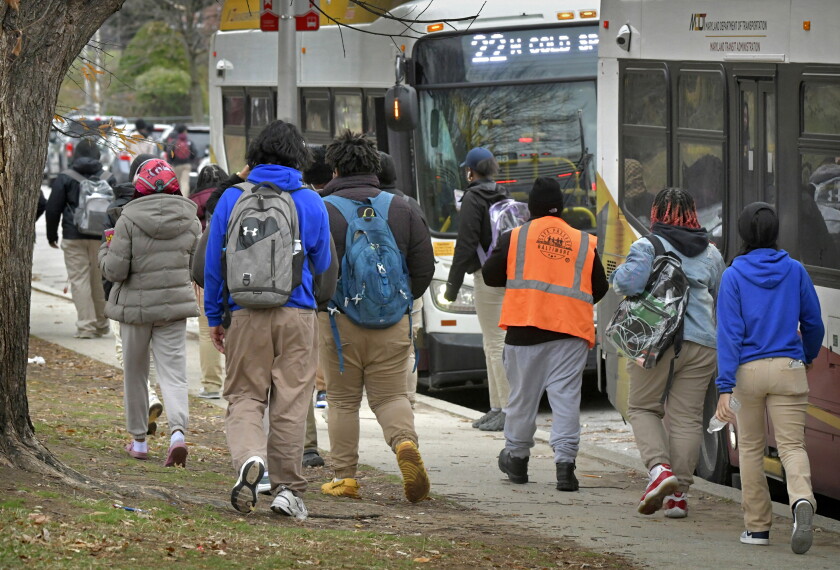
As schools prepare for the summer break, immigration advocates and researchers say it’s more important than ever for schools to continue to serve immigrant students and families, especially as concerns grow over renewed efforts of mass deportation.
School leaders across the country spent this past school year reviewing and updating safety protocols involving the presence of immigration officials on campuses after President Donald Trump’s administration revoked federal guidance deeming schools “protected areas” from immigration enforcement.
Shifting immigration policies prioritizing detention and deportation sparked enough fear in families that some school districts reported increased absenteeism this year as a result.
To get ahead of possible absenteeism in the fall, schools need to send a clear message over the summer and the next school year that they are trusted, welcoming spaces for immigrant communities, said Alejandra Vázquez Baur, a fellow at the Century Foundation and co-founder of the National Newcomer Network, a coalition of educators and immigrant advocates.
That safety can be made visible through academic summer programming, resource fairs, and more.
“This is not a time to take a break from open communication with your families,” Vázquez Baur said. “Bolster that communication, share updates as there are changes in policies or threats to the community. Maintain that open and honest communication because families need it in order to feel safe to return in the fall.”
Districts use summer programming to connect with immigrant families
In the 2023-24 school year, 16.3 percent of more than 912,000 students were English learners in New York City public schools. Many of these students are immigrants of various legal statuses or live in mixed status households.
District leaders have long served these students over the summer through resources and tailored programming.

Resource fairs, in partnership with local organizations, offer students goods and services such as 1,500 pairs of brand-new sneakers, dental screenings, legal resources, and more. School buildings also house care closets where students can get free donated items such as clothing year-round, said Tamara Mair, who leads the district’s Project Open Arms plan for serving newcomer students and students in temporary housing.
On the academic side, the district’s Summer Rising program for grades K-12 includes dedicated language and literacy support, and programs like the Global Leaders Academy offers high school multilingual learners a chance to meet United Nation representatives and build leadership and language skills, said Charlene Clark, executive director for multilingual and immigrant support in the district.
That’s in addition to English-as-a-second-language programs for students ages 18-20 getting their GED, as well as adult education programs for students’ families.
These programs and services help schools maintain engagement with English learners and immigrant families over the summer, though intentional outreach is just as essential.
The district boasts school-based teams across select schools called Dream Squads. During the school year, these educators and school leader teams work to meet English learners’ and immigrant students’ academic and social-emotional needs through new and existing programs. Over the summer, these teams lead pop-up events, multicultural fairs, and planning sessions to build and expand their support strategies for the coming year, Clark said.
Tailored outreach is also central to Metro Nashville public schools, where 31 percent of more than 81,000 students were English learners this past school year.
The district hires immigrant youth transition specialists to help onboard newly arrived students, especially at the high school level, and help them navigate their first year, said Molly Hegwood, the executive director of the district’s office of English learners.
“We noticed in our data that we lost students in that first year if we didn’t help them engage with their school community,” Hegwood said.
These specialists also stay in contact with students and families during the summer to get ahead of attendance issues in the fall.
As news stories emerge of students being detained after court appearances and immigration raids happening in communities, district leaders say these summer outreach efforts are key to counteracting fear and keeping students connected to school.
Summer gives districts planning time for immigrant family supports
Providing summer support doesn’t need to fall solely on districts, Vázquez Baur said.
Districts can also refer families to trusted community partners that offer summer programming and legal aid resources.
The summer break is also a key opportunity to strengthen partnerships with immigrant-serving organizations that have deep trust in local communities.

“Strengthen those relationships now, so that those community orgs can relay to families it’s safe to go back to school,” she said.
District leaders should also ask these community partners what questions and concerns they are hearing from families—and work to address them in the following school year.
And in preparation for the fall, Vázquez Baur advises district leaders to closely monitor immigration policy changes.
“Pay attention to any updates in immigration policy or education policy that might impact students and prepare to update protocol,” she said.