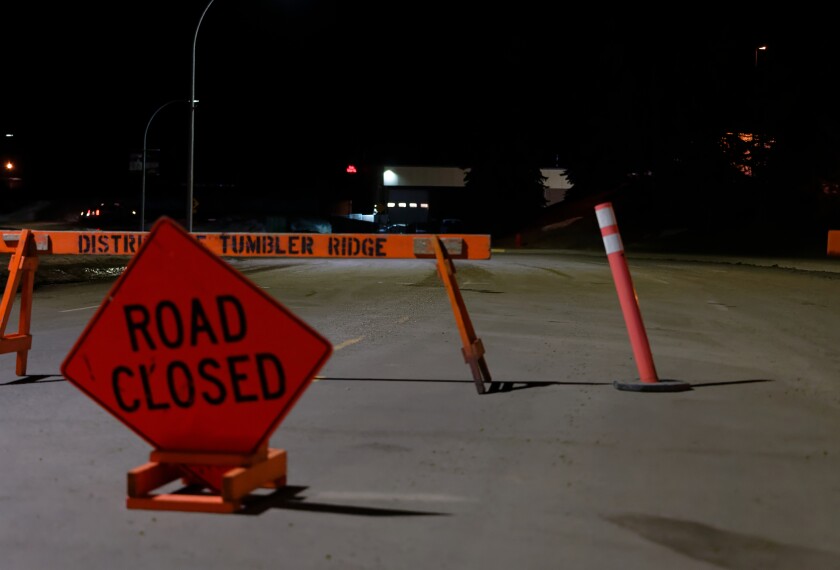
My town just joined Minneapolis, Baltimore, and others swept up in the movement to “defund police.” Burlington, Vt., reduced the police budget by 10 percent, eliminated 12 vacant officer positions, and redirected thousands of dollars to equality initiatives in the city.
Current calls to “abolish,” “dismantle,” and “defund” police in the wake of the killing of George Floyd have troubled many political commentators and citizens, including some who would consider themselves allies of the larger Black Lives Matter movement. Any move to dramatically reduce the presence or operating capacity of the nation’s more than 17,000 police agencies is stirring fears of renewed waves of violent crime and other threats to public safety.
It doesn’t have to be that way, however. A different perspective on the problem allays fears by taking crime seriously while linking public safety to a better long-term solution.
Proposing to scale down resources for a public institution is not new, as the vast majority of the nation’s school districts can attest. In fact, when fiscal hard times come or new perceived needs arise, all institutions jostle to keep at least their share of the budget pie. They are competing for the same scarce local and state funds.
Bloated police budgets in school districts that are lacking money for paraprofessionals, psychologists, and academic interventions aren’t preventing crime; in fact, they may be an unintended contributor to it."
But in this competition, I’d argue, police departments and schools have a special relationship and not only because their funding often accounts for the largest shares of city budgets. Exorbitant expenditures on law enforcement can very well mean depriving schools. And underfunding schools threatens public safety. That in turn increases demand for police in a downward spiral of ineffectiveness.
We saw the contest between police and schools play out recently in New York City. Mayor Bill De Blasio’s original pandemic-induced budget adjustments for 2021 cut 3 percent from the department of education and just over one-third of 1 percent from the police department. Only after public outcry was the budget revised, ultimately directing a billion dollars to youth and community programs from the police budget.
The impetus to cut local funds for education in favor of police funds is even more worrisome in light of what’s happening in states. While the majority are still funding schools below their prerecession 2008 levels, per capita spending on law enforcement has seen steady growth over the past 25 years.
Comparing the role of education to the role of public safety may seem like a bizarre exercise, but the link between crime reduction and high-quality education has been well established. One study conducted by the Council for a Strong America, an organization that includes law-enforcement leaders, found “increasing graduation rates by 10 percentage points would prevent over 3,000 murders and nearly 175,000 aggravated assaults in America each year.” Viewed in this light, reducing school funding constitutes a grave threat to public safety. Bloated police budgets in school districts that are lacking money for paraprofessionals, psychologists, and academic interventions aren’t preventing crime; in fact, they may be an unintended contributor to it.
As the debate over the role of race, police tactics, and funding priorities continues, it’s well worth remembering the crime fighters occupying the front of classrooms all throughout this country. Rather than “defunding,” what is called for in many cities is “rightsizing” police agencies, while simultaneously refunding school districts. Framing the issue as a matter of proper proportions will also go a long way to ease the minds of those who fear that “defunding” would create a public-safety emergency. “Right size the police” may not have the same dramatic impact as “defund,” but it is the logical starting point of the financial side of the conversation: At what point are police unable to carry out essential functions? At what point do police budgets deprive other vital services of necessary resources? How many fewer crimes might we have with a lower dropout rate and more students heading to college?
Following the 2007-08 financial crisis, both schools and police departments sustained severe budget cuts. Once the recession was over, many school districts remained in fiscal-austerity mode while police departments returned to their prerecession funding levels. Predominately-nonwhite school districts took the brunt of the blow, receiving as much as $23 billion less annually in state and local funding in 2016 than predominately-white districts serving the same number of students.
The defunding of schools has been so severe that most educators are working for lower inflation-adjusted wages than before the Great Recession. They also earn 11 percent less than those with comparable education. In contrast, the average law-enforcement agent’s salary increased by 14 percent in just the past five years, according to the federal Bureau of Labor Statistics.
As citizens head to the polls this fall, many educators hope their fellow citizens will consider the policies that have led to decades of underfunding education while law enforcement has been funded well beyond reasonable levels. Whether the concern is public safety or social justice, schools play a leading role. Education has the power to drastically reduce crime by cultivating a productive and informed citizenry while, if treated as a system of empowerment, transforming historically neglected and mistreated communities.
Voters have a choice in November: Support candidates who will continue diverting scarce state and local tax money from youths or those who will recognize how dependent our democracy is on effective schools and will properly fund them.