As a 10-year teacher in an inner-city community, I’ve seen countless students fall through the cracks due to the wide gap between the supports that they need and the supports they actually receive.
Providing academic, motivational, and socio-economic support to students as part of systemic change is easier said than done. Yet instead of viewing the creation of support networks as another responsibility on their already large plates, educators should approach them as an upfront, proactive investment. This is preferable to just engaging in event-driven reactions when students misstep.
Below are models of two classes I designed and piloted that aimed to meet different needs of students. These examples are followed by guiding questions for educators to consider when creating student-support programs.
Peer College Leadership Program
The Peer College Leadership (PCL) program was designed to increase student awareness and access to college resources while cultivating a “going-to-college” mindset at our school. Though most of our students will be the first in their families to graduate high school and go to college, our school didn’t have a college counselor. We set out to make college more visible and accessible to students, while systemically promoting the idea that all students can attend college.
The program began with a class brainstorming session in which we generated a list of 15 college “priorities” to address, including family-college workshops, career days, college field trips, guest speakers, and advisory talks with students. We assigned point people for specific tasks and ultimately formed three committees, with rotating lead students: college awareness, community connections, and visibility. Students, teachers, and college representatives worked together to demystify the college application process and make higher education a tangible option for students.
Healthy Lifestyles Program
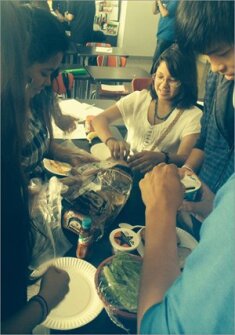
The second course I designed was a Healthy Lifestyles physical education and health program that sought to build students’ holistic well-being. Three times a week, I led students through cardio-fitness routines, strength-training workouts, yoga sessions, and meditation. They also participated in weekly workshops around six priority areas: nutrition, exercise, stress management, water intake, sleep, and safe-body decisions. Planned Parenthood representatives, Narconon drug addiction speakers, Let’s Move! nutritionists, and Children’s Hospital doctors led workshops on how to navigate body-related decisions and answered the countless questions students had about their developing bodies.
Lessons Learned
I learned a lot about designing support networks through building these course programs. Here are a few takeaways:
- Align your program with your school’s needs. A support network will have a greater chance of being accepted by administration if it meets your school’s needs and priority areas. My courses were approved because they increased students’ access to information about college and relieved our P.E. teacher of a heavy student load.
- Find space and resources. Though I was lucky to have supportive leadership, finding the appropriate space in which to hold support programs was just as important. I also identified existing resources within our school and community.
- Get community organizations involved. Community organizations were transformative in enriching students’ perspectives. We offered guest speakers, university field trips, student internships, and other opportunities to extend learning outside the classroom. We were also spotlighted in a blog post by Let’s Move!, which reinforced students’ self-esteem and the value of our program.
- Take risks and adapt. In piloting these programs, we probably failed as often as we succeeded. But we learned from those lessons and constantly adapted.
- Gauge student interest and collect feedback. Before beginning these programs, we surveyed students to determine potential interest. We also measured impact through pre- and post-course surveys, course reflections, and student-achievement rates. Later, we made this information—and students’ successes—public to reinforce the value of these programs.
Student Impact: Investing in The Future

Both programs had similar goals: cultivating student power and agency in making positive decisions. Healthy Lifestyles became a source of empowerment for students by helping them take control of their bodies through thoughtful decisions. These programs helped students see that they are worthy of success and that it is attainable through their decisions and life choices. After both classes, students noted that they had increased confidence and willingness to spread their knowledge and enthusiasm to others.
Last week, one student, Ulysses, told me that some of his family members were recently diagnosed with diabetes. After cultivating healthy nutrition and exercise habits through the year, Ulysses’ weight has dropped from 210 to 170 pounds, greatly reducing his chances of developing the disease. He told me that he feels more confident and has been sharing his new lifestyle approach with his family. For an end-of-year project, Ulysses and his classmates are exploring ways to increase healthy living in their school, families, and communities.
The Peer College Leader course has also had a significant impact on students and their ability to direct the course of their lives and communities. One student wrote, “The experience has motivated me to be someone in life to pass down the knowledge I have gained and what I will gain in the future. It has impacted me to pursue a career/a dream that will help others in my community.”
Another student, Stephanie, remarked that I’m her English teacher, college counselor, and personal trainer/life coach, all in one. As we discussed her experience this year, she declared, “I changed my whole life.” And I couldn’t help but think that if we want to change the whole life of a child, we need to teach to their whole needs.
The great news is that it looks like these programs will continue. I’m going to be teaching Healthy Lifestyles again next school year. And student leaders did such a phenomenal job showing the importance of college access that our school decided to invest in a full-time college counselor who will continue the Peer College Leaders program.
Though these support networks occurred as courses, support can be structured across various approaches, forms, and spaces depending on schools’ and students’ needs. Here are some guiding questions for educators to consider when thinking about the support networks they want to create for students:
- What is our goal?
- What are the needs and challenges of our students and school?
- What family and community resources exist to help us reach our goal?
- What type of support is needed (academic, motivational, socio-emotional)? What space should it occur in?
- Who are the people (students, staff, family, and community members) who will be responsible for creating and sustaining the network? How can the school support them with time and resources to carry out the plan?
- What feedback loops and assessment measures can ensure adjustments and sustainability of the support network?
By exploring these guiding questions, surveying students to determine their needs, and finding support and space within your school, educators can create sustainable support networks that have long-lasting impact on students. It has made all the difference for my students, as I’m sure it will in yours.


