In a few weeks, 98 percent of New York City’s 79,000 rising 9th graders will be entering public high schools that they’ve selected from more than 650 options throughout the city’s five boroughs.
New York’s ambitious high school selection system isn’t perfect. But it has liberated thousands of students from failing neighborhood high schools, transformed the city’s high school principals from bureaucrats to entrepreneurs, improved the perception of public schools among middle-class families, and helped raise the city’s graduation rates. At a time of renewed advocacy of private school vouchers, New York’s choice system is a model strategy for harnessing the power of the marketplace to better serve students and stimulate improvement through competition within public education.
Of the small number of cities that permit students to select their public schools, most make school choice optional and relatively few families participate. New York City has taken the bold step of requiring rising 9th graders to select their high schools, a strategy that has created a far more vibrant public school marketplace than exists anywhere else in the country.
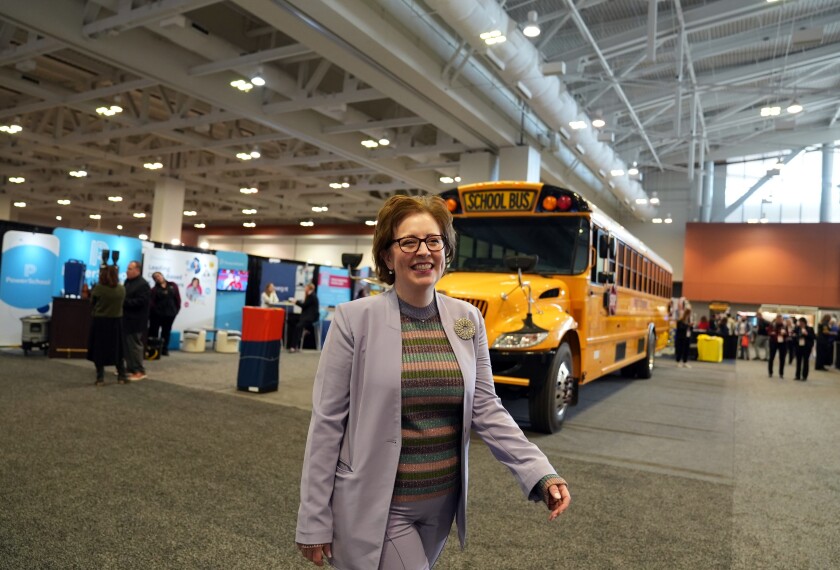
As one measure of the scale of the system, over a single fall weekend last year, more than 32,000 families attended an annual citywide school fair at Brooklyn Tech to talk to representatives of hundreds of high schools.
The number of New York high school options has tripled in a generation, thanks in part to former Chancellor Joel I. Klein’s replacement of many of the city’s dysfunctional comprehensive high schools with smaller alternatives, and today students are able to select schools with themes ranging from animal science to architecture, hands-on engineering, film, Latin, and expeditionary learning.
Some of the schools are selective. According to The New York Times, about 30 percent of city high schools screen students using grades, test scores, attendance, and other measures. Some give preference to in-borough residents. But half the seats in many high schools and all of the slots in others are open to any student, making New York’s choice system more egalitarian than many. (There’s a separate system for admission to Brooklyn Tech and seven other elite magnet high schools, as well as auditions for the city’s famous performing-arts high school.)
And New York’s brand of public school choice is fairer, less bureaucratic, and more transparent than other models, thanks to the introduction of a new school-selection system in 2004. School choice started in the city in the 1970s as a way to counter middle-class flight from public schools. But the school-selection process dragged out over three rounds of bidding over many months (sometimes into the beginning of the following school year), gave the final say in admissions to principals (thereby opening the process to political influence), and left 35,000 students in schools they hadn’t selected, damaging the district’s reputation among the very middle-class families it sought to recruit.
New York’s brand of public school choice is fairer, less bureaucratic, and more transparent than other models."
But in 2004, school officials launched a new choice process featuring a computerized matching model designed by Harvard economics professor Alvin Roth. (Alvin Roth and Neil are co-founders of the Institute for Innovation in Public School Choice, a nonprofit organization.)
Derived from matching markets in medical residencies, kidney donations, sororities, law clerkships, and Internet auctions, the new system requires students to select a dozen schools; the mathematical formula behind the system eliminates waiting lists and the opportunity for favoritism (the school system’s computer rather than principals now has the final say on where students go) and greatly increases students’ chances of attending schools they’ve selected.
The number of students attending schools they hadn’t chosen plummeted from 35,000 in 2003 to 790 in 2009. This past spring, more than 65,000 of the city’s rising 9th graders were granted one of their top five choices for 2011-12, and after the completion of a supplemental-selection round, only a small fraction had to be administratively placed because they couldn’t be matched with schools they wanted.
The percentage of students placed in a top-five choice in the first round was down a bit this year—for a good reason. Choice officials included graduation rates in school profiles for the first time, and students applied in greater numbers to schools awarding more diplomas. That’s no surprise. Markets with informed consumers tend to work more efficiently, rewarding the best products and providing buyers with the most value.
Measures such as the “A-F” school rating system introduced under Chancellor Klein give New Yorkers information that’s often lacking in other cities. And the annual extravaganza at Brooklyn Tech is part of a larger communications strategy that includes boroughwide fairs, parent workshops, a 531-page guide, and an extensive website.
But the city’s education department needs to continue to expand information on schools and improve its performance in helping students navigate the high school selection process. The system currently relies heavily on undertrained and overextended middle school counselors who often work with 350 students each. Strengthening the counseling corps and launching a broader communications campaign about the choice system would reduce students’ missteps under the program, including applying only to a handful of schools or to selective schools beyond their reach.
A core challenge is ensuring that there are enough strong high schools in the city for every student. Klein’s efforts to close failing comprehensive high schools (using the results of the annual high school selection process to both target failing schools and create popular alternatives) helped on this front. But there are more dysfunctional neighborhood high schools to close, and a number of the city’s new, smaller options aren’t yet rigorous enough.
Still, New York City has demonstrated that there can be a vibrant marketplace of schools that leverages choice and change—within the public school sector.