A global pandemic has challenged educators immeasurably, while at the same time giving them the chance to show their creativity and how seriously they take their commitment to young people and the creativity they bring to bear toward that aim.
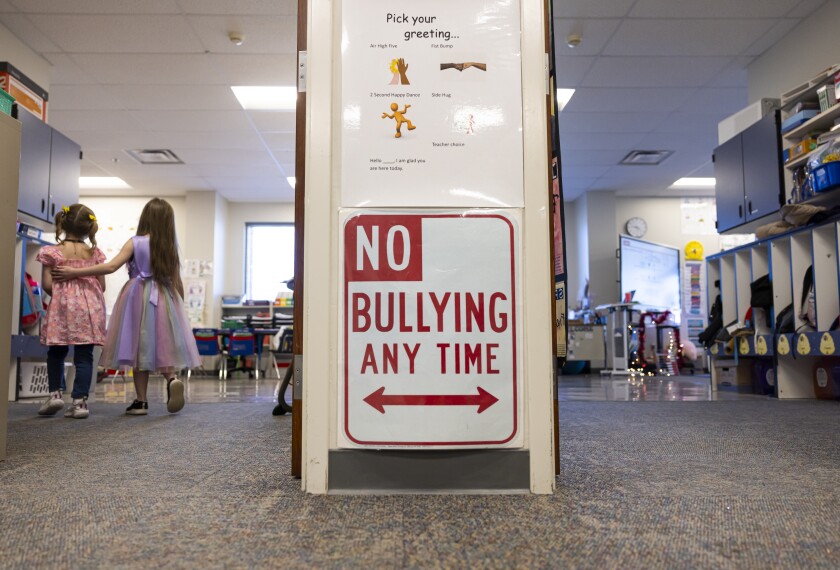
Still, the events of the past few months have presented educators an especially tall order: teaching children good behavior when the adults, including many senior government leaders, are not modeling it.
Monumental challenges call for our best moral thinking. In the words of a White House proclamation issued Oct. 18 in honor of Character Counts Week and signed by President Donald Trump: “We must resolve to build lives and communities grounded in moral clarity in order to strengthen ourselves, our families, our communities, and our nation.” As an ethicist, I think a lot about moral clarity. And my recommendation for educators in the pandemic is this: Put the interests of the people you serve—your students—first and keep them there. It’s not original advice, I acknowledge. Members of the teaching profession often remind each other to put students first. Yet the ethical imperative is even stronger than the professional one because it is rooted exclusively in the right ways for human beings to treat one another. All adults, including teachers, have special obligations to children—one of our most vulnerable and dependent groups.
I suggest three steps teachers can take as they are able."
Unfortunately students’ interests often get lost in the busyness we all have allowed to crowd school weeks and work weeks. And it’s been all too easy lately to be distracted by what government officials are or are not doing.
To stay focused on the young people they serve, educators need a game plan for the duration of the pandemic. I suggest three steps teachers can take as they are able. The first step is prioritizing student health. Once that is assured, educators can teach students how to use their critical-thinking skills to make decisions for themselves. And if they have the capacity and time to do more, teachers can educate students about leadership and civics.
1. Put safety first. The top priority in a pandemic is ensuring that the learning environment for students is physically safe. Educators teach science, and this is a moment like no other to immerse students in applied science. Teachers have the opportunity to model adherence to health guidelines during the pandemic— wearing masks, washing hands, social distancing, staying home when feeling ill. When educators do this, they are actively teaching how those guidelines keep us safe.
Teachers can also signal that it’s important for students to feel safe. With the emphasis on social-emotional learning in today’s public schools, we can hope most children find themselves learning in environments where they are comfortable sharing their concerns. Fortunately, information resources for mental health during the pandemic abound. Teachers can help students learn ways to address their fears about falling behind in school and the health and safety of themselves and their families. Together, students and teachers can identify problems, such as those that might arise if guidelines are not followed, and arrive at solutions. Simple approaches, like asking students about their sense of safety and the safety of the community as a whole at the beginning and end of each day, can underscore the goal.
2. Teach critical thinking. Teachers who attend to their students’ mental health lay the foundation for students to pursue their intellectual development, even in times of crisis. Critical-thinking skills are particularly germane during a public-health threat, and students can learn how to identify sources of information they can trust. Lessons on media literacy and digital citizenship are in order to augment lessons students may be learning at home. The pandemic is an opportunity to help students think for themselves and consider the needs of the whole community. Teachers can help young people have confidence in their own abilities to discern the best paths to safe behavior. By encouraging community-minded behavior—for example, wearing a mask to protect others—students learn about their connectedness to others, the commitments that accompany community relationships, and the concept of the common good.
Now is a good time for educators to remind themselves of the history of public education in the United States. Public schools were not initially created to teach writing and math but civics, in order to develop an educated and informed citizenry, capable of engaging in democracy. Math and reading were introduced as a means to that end. Elevating the common good (see above) and personal virtues (like responsibility and transparency) are education fundamentals absolutely relevant to current events.
3. Consider leadership. If educators have anything left in the tank after keeping students safe and teaching critical-thinking skills, this is also an opportune moment to consider political leadership, framing it as responsible service to others, not just having and using power. Educators have a real-time opportunity to teach that ethical leadership, in many different arenas, is about creating the conditions for others to excel and be their own best selves as well as engaging in dialogue to generate new and better ideas for the community. Timely topics include how government works and frameworks for ethical decisionmaking by those in authority. Today’s students find themselves in the crosshairs of history. They are being shaped by a turbulent year. What they learn from this moment and what agency they develop from it forecasts our shared future. If leaders from the White House to the statehouse to the schoolhouse focus on students’ best interests and demonstrate ethical decisionmaking, the future is bright.
It’s an extraordinary time. I hope educators will seize it.