Students in an alternative high school have a weeklong unit on the history, math, and science of Motown music. It is the only week in the school’s history with perfect attendance.
Middle school students create history projects around areas that interest them, in formats ranging from exhibits, to skits, to PowerPoint presentations. Their topics include the Silk Road, the disappearance of the Roanoke colony, and the discovery of America by the Vikings.
Elementary students gather after school for a weekly math club. Local university students supervise math activities, culminating in a family math night that brings youngsters’ parents into the school as well.
What do these activities have that regular school fare lacks? Flow.
Unlike lecture and note-taking, high-stakes testing, and a standardized curriculum, each of the above activities engages learners at their own level, and presents them with an appropriate level of challenge.
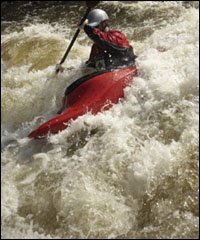
Mihaly Csikszentmihalyi’s concept of flow—the psychological process that describes how people balance skill, interest, and challenge—may hold an important piece of the puzzle of school reform.
Flow explains how the mind rises to challenges—how people can become “lost” in an activity that fully engages them, whether it is playing golf on a tough course, cooking a new recipe, playing a complex video game, or doing a Sudoku puzzle. According to flow theory, if the challenge level is too low, participants simply become bored, often dropping out of an activity. This might be the case, for example, if you were forced into a remedial math or writing class, relearning concepts you already knew. High school dropouts consistently report that their coursework is neither challenging nor relevant, and many drop out despite good grades.
If the challenge level is too great for the skills possessed, a person can become discouraged and drop out of an activity. This is what might happen if you were placed in a class at the other end of the spectrum, one far too advanced for you to even formulate questions about the subject. As states’ graduation requirements become more extensive and academically rigorous, there may be many students lost because they’ve been dropped into classes above their present skill levels.
Part of the key to the dropout problem also can be found in interest, or how students relate to the curriculum itself. Even if challenge and skill are well matched, most people will not find “flow” if the activity does not connect to the rest of their lives and their interests. The most powerful learning in schools is often found in activities that harness individual students’ interests and creativity—programs such as the Intel science competition, National History Day, and the Science Olympiad. It is also found in activities that connect directly to the world around students—most notably, academic service-learning courses and other forms of community engagement. If schools could harness some of the energy and learning generated by these co-curricular activities and integrate it into the curriculum, tremendous learning gains would take place.
When skill, challenge, and interest are at an appropriate balance, students can find flow, and they are able to accomplish tasks with less work and effort, even while processing more information. Performance improves through immediate feedback about how they are doing—feedback that’s given with improvement, not sorting, in mind.
Unfortunately, high schools increasingly are designed around high-stakes testing, such as exit exams and the SAT or ACT, that rewards work performed on one day, not over a period of time. Tracking also can defeat the purpose of flow, as many students trapped in lower tracks may never discover a passion for a subject taught at a higher level, just down the hall.
When skill, challenge, and interest are at an appropriate balance, students can find flow, and they are able to accomplish tasks with less work and effort.
Schools would need to be reorganized to help more students reach a state of “learning flow.” To properly help them learn, teachers would need fewer students in their classes, so that they could learn more about each student’s strengths, weaknesses, and special interests and aptitudes. Time and space within the building might need to be rearranged, too, to find the places and the blocks of time that work well for extended projects and feedback. On a curricular level, students would learn more if they were exposed to subjects in more than one class. In a more tightly integrated curriculum, if students encountered an area of strength, such as mathematics or writing, more than once, they would be better able to master the subjects associated with it.
If schools took flow seriously, the role of the teacher would change substantially. The teacher would become an expert in providing the correct level of challenge and giving quick feedback to help each student learn better. Teachers in schools that stressed flow also would try to develop their students’ ability to seek out and find flow. The most recent work in this area urges educators to help their students build the “psychological capital” that will enable them to find and engage in activities that challenge their minds, rather than wait for others to bring the challenge to them.
In the end, the worst enemy of flow may be our own low expectations of students. If we believed that our students were talented and needed appropriate challenges that engaged their interest, we would invest far more energy and resources in ensuring their success. It is only our tacit belief that up to 80 percent of them are untalented, and not worthy of challenge, that keeps us from trying.


