Corrected: This story gave an incorrect title for Kate Walsh. She is the president of the National Council on Teacher Quality.
Reading and math may be getting their due attention under the No Child Left Behind Act, but a lineup of education experts met here last week to argue that the focus of the federal law is not enough to ensure students are receiving a “21st-century education.”

Some 200 leaders of influential organizations, educators, and policy analysts debated in a Dec. 12 symposium the need for more history, social studies, arts, literature, and character lessons in the curriculum. Those subjects, many educators say, have been relegated to the margins of the school day as schools expand reading and mathematics lessons to help students gain proficiency in the two disciplines that are at the center of NCLB accountability.
“Education must aim for far more than mastery of the basics, far more than the possession of tools for economic competitiveness,” said Diane Ravitch, an education historian. “Certainly, it should aim for enough [content] for an examined life, enough for civic virtue, and enough for those mental habits that incline one to think, to read, to listen, to discuss, to feel just a bit uncertain about one’s opinions, and to love learning.”
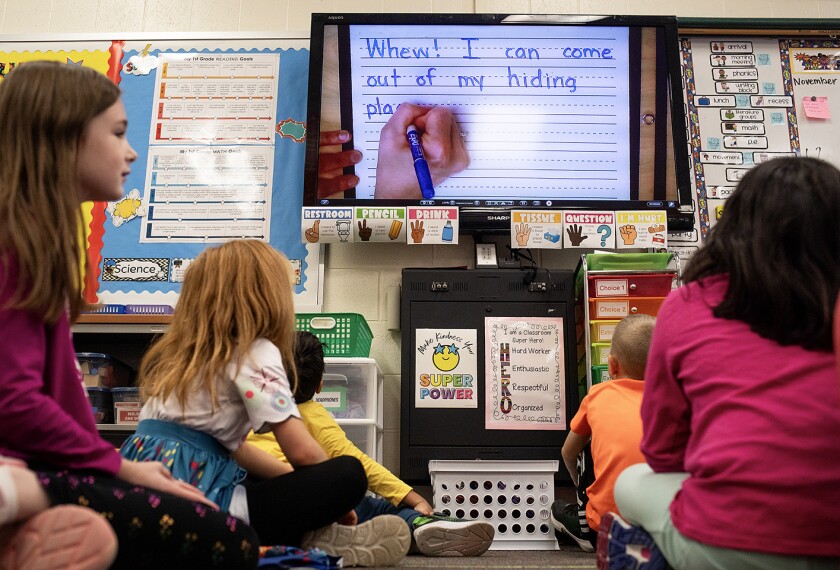
Yet more and more, Ms. Ravitch and other participants argued, schools are stealing time from history, the arts, and even recess to devote instruction to reading and math, the subjects tested under the federal law. States are also beefing up science instruction in anticipation of mandated state tests beginning next year.
Testing History?
While most of the speakers expressed support for the law, and the strict accountability it requires for student achievement, they agreed it should be strengthened to ensure a broad liberal arts education for all students. To that end, the gathering’s organizers proposed that participants join in forming an advocacy group to promote that viewpoint among policymakers and educators, akin to an updated version of the defunct Council for Basic Education.
“Every education reform goes too far,” said Chester E. Finn Jr., the president of the Thomas B. Fordham Foundation, the Washington think tank that sponsored the event. “The press for basic skills, particularly for minority and disadvantaged students, is legitimate, but don’t stop there.”
Panelists suggested a number of strategies for countering the trend, including improved teacher preparation and professional development in the academic-content areas; increased instructional time; and a richer curriculum. Some speakers suggested that, when the law is brought up for reauthorization, scheduled for next year, testing requirements be added in history and other areas to force schools to prepare students in those subjects.
Lengthening the school day and using the existing time more effectively, however, could prove most practical, according to Kate Walsh, the executive director of the Washington-based National Council on Teacher Quality. Initial findings from a study of the nation’s largest 50 districts that she presented show substantial variation in school time among urban districts. Chicago students, for example, spend more than an hour less than their counterparts in New York City in school daily and some eight weeks yearly.
E.D. Hirsch Jr., the founder of the Core Knowledge Foundation and a professor emeritus of education at the University of Virginia, in Charlottesville, urged educators to infuse nonfiction texts and more content on a variety of topics into blocks of reading instruction. “The key to teaching reading comprehension is to provide students with a cumulative education in a broad range of subjects.” he said.
Dana Gioia, the chairman of the National Endowment for the Arts, offered a personal account of how exposure to the arts expanded his educational and career opportunities, despite the low expectations of the tough Los Angeles neighborhood where he grew up.
“A love of reading and the arts is not being nurtured or fostered by our education system,” contended Mr. Gioia, who argued that arts and literature are catalysts for helping students find their strengths and interests.
“We cannot prepare someone to be a productive citizen of a free society,” he said, “if the only thing we do is prepare them for standardized tests.”