Classroom Technology

What’s in a Name? Check Out ISTE+ASCD’s Rebrand ... ish

By Alyson Klein — June 28, 2026 2 min read
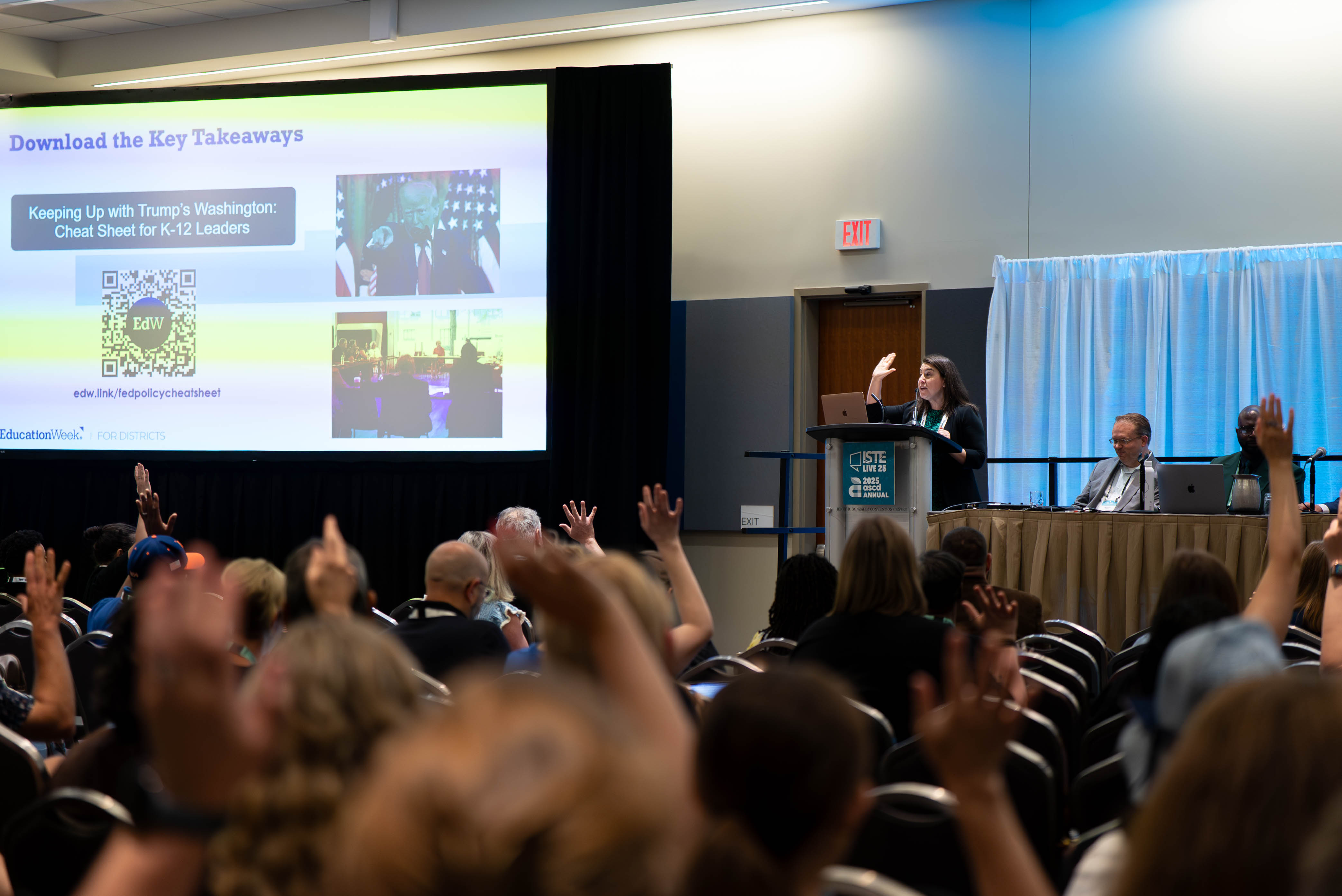
A look at the 2025 ISTE conference in San Antonio.
  • Save to favorites
  • Print

Four years ago, the then-International Society for Technology in Education, better known as ISTE, announced a merger with the former Association for Supervision and Curriculum Development, or ASCD, one of the oldest and largest K-12 professional development associations.

Since then, the combined organization—temporarily called ISTE+ASCD—has “co-located” its mega conferences and sought to define its mission as a centralized resource for educators navigating teaching and learning in the digital age.

Its leaders promised to eventually unveil a new, permanent moniker.

At the kickoff of the organization’s ISTELive 26 + ASCD Annual Conference held in Orlando, Fla., between June 28 to July 1, CEO Richard Culatta revealed that ISTE+ASCD will become … ISTE.

The twist: The acronym will now stand for the International Society for Transforming Education.

The new name comes at a moment when schools are grappling with a gamechanging technological twist—generative artificial intelligence—which purports to personalize lessons for struggling students but can also serve as an uncredited ghostwriter for would-be cheaters and opens the doors for massive student-data privacy problems.

We are in a moment where we need to transform learning. We can’t just keep doing the things that we used to do.

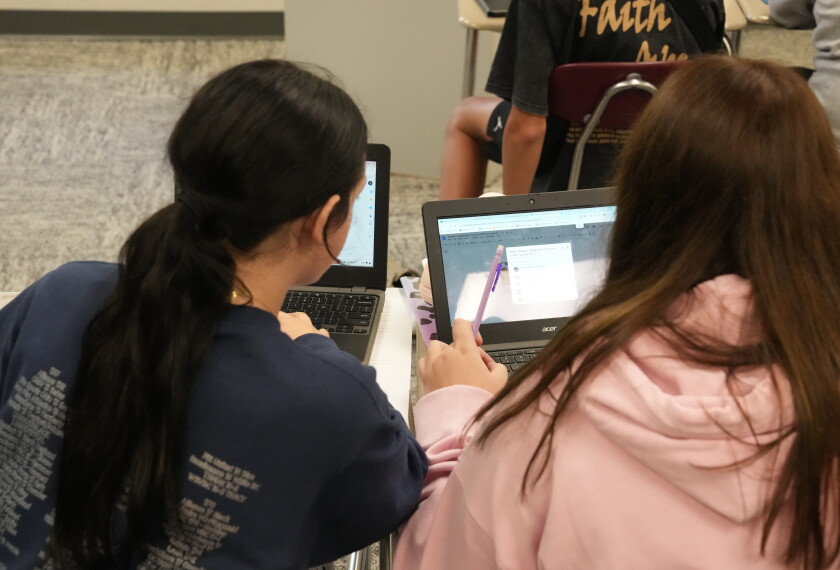
It also comes as school districts around the country are rethinking their use of technology in response to clamorous criticism from parents and caregivers, as well as bipartisan political pushback to a perceived increase in student screen time.

Join us at ISTE+ASCD
Event

Heading to Orlando for the ISTE/ASCD conference? Be sure to attend The Ed-Tech Backlash Is Here. How Should District Leaders Respond? on Monday, June 29, 1-2 pm ET. Join EdWeek Assistant Editor Alyson Klein, EdWeek Research Center Director Holly Kurtz, and a panel of district leaders to understand what’s fueling the ed-tech pushback, get practical takeaways on how to respond to community concerns about screen time, and more.

Join us >

“ISTE was never really about the technology. We were about accelerating innovation,” Culatta said in an interview before the conference. “ASCD was never about supervision and curriculum development. It was about transforming learning through providing good supports to school leaders.

“Both organizations, legacy organizations, had names that were about what they did. We are now shifting to a name that describes why we do it. So that’s the key shift, and I hope I think it will really resonate with people.”

Why add the word transforming?

Culatta explained: “We are in a moment where we need to transform learning.We can’t just keep doing the things that we used to do. We can’t do assessment the way we used to do assessment. We can’t do teaching the way we do teaching. We have to be very thoughtful about pushing the boundaries more. We’re really worried there isn’t enough of a drive to really rethink and reimagine some key parts of learning, and that’s what we do.”

Why the long wait for the big reveal?

“We got some really good advice early on, which was, you don’t make a name and then become what the name is, you become what you want to be, and then you rename” your organization based on that, Culatta said.

Events

This content is provided by our sponsor. It is not written by and does not necessarily reflect the views of Education Week's editorial staff.
Sponsor
Artificial Intelligence Webinar
From Passive to Active Reading: Student Engagement in the Age of AI
What the research tells us about active reading and student engagement—and what it means for teaching in an AI-enabled world.
Content provided by Pearson
This content is provided by our sponsor. It is not written by and does not necessarily reflect the views of Education Week's editorial staff.
Sponsor
Professional Development Webinar
Micro-Learning, Macro Results: Reimagining Professional Learning
Rethink professional learning with 3 strategies that personalize professional learning, validate expertise, and support educator retention.
Content provided by Mira Education & Modiv EDU
This content is provided by our sponsor. It is not written by and does not necessarily reflect the views of Education Week's editorial staff.
Sponsor
School Climate & Safety Webinar
There But Not Present: Rethinking Student Engagement
Learn how to recognize the early signs of disengagement and what the behavioral science reveals about which interventions actually work.
Content provided by Frontline Education

EdWeek Top School Jobs

Teacher Jobs
Search over ten thousand teaching jobs nationwide — elementary, middle, high school and more.
View Jobs
Principal Jobs
Find hundreds of jobs for principals, assistant principals, and other school leadership roles.
View Jobs
Administrator Jobs
Over a thousand district-level jobs: superintendents, directors, more.
View Jobs
Support Staff Jobs
Search thousands of jobs, from paraprofessionals to counselors and more.
View Jobs

Read Next

Classroom Technology Opinion The Big Flaw With Ed-Tech Tutoring Isn't Technological
Before focusing on the technology, we need to redesign the learning model, Michael Horn argues.
•
4 min read
The United States Capitol building as a bookcase filled with red, white, and blue policy books in a Washington DC landscape.
Luca D'Urbino for Education Week
Classroom Technology Q&A Students’ Tech Engagement Doesn’t Equal Learning, Psychologists Warn
A panel of psychologists shares recommendations for ensuring technology promotes meaningful learning.
6 min read
DSC03088
Students at a high school in Plymouth, Ohio work on how to properly prompt the Gemini AI app on Aug. 28, 2026. A new report of the American Psychological Association warns that student engagement with tech apps should not be conflated with benefits for learning.
Ruddy Roye for Education Week
Classroom Technology Q&A Facing 'Techlash,' How Should Schools Talk to Parents About Tech Use?
A school communications expert explains how schools should approach their messaging around tech.
5 min read
MEAD, CO - AUGUST 18: Parents watch and and take photos of their kids as they enter the school during their first day of class at the Big Sky PK-8 School in Mead on Aug. 18, 2026.
Parents watch their kids as they enter the school on the first day of class at the Big Sky PK-8 School in Mead, Colo., on Aug. 18, 2026. As schools face growing backlash from parents over their use of educational technology, a school communications professional has some pointers on how schools can communicate with parents about how they're using technology.
Joel Solis/MediaNews Group/Boulder Daily Camera via Getty Images
Classroom Technology It's About Quality Tech Use, Not Screen Time, Trump's Top K-12 Official Argues
Trump administration's top K-12 official urges educators to focus on whether ed tech is effective.
5 min read
Assistant Secretary for the Office of Elementary and Secondary Education Kirsten Baesler speaks during the National Forum on Education Policy in Washington, DC on Wednesday July 8, 2026.
Assistant Secretary of Elementary and Secondary Education Kirsten Baesler speaks during the National Forum on Education Policy in Washington on Wednesday, July 8, 2026. Baesler urged educators to ensure ed tech is delivering results for students, rather than focus single-mindedly on the amount of time students are spending on screens in class.
Demetrius Freeman for Education Week