It’s a truism in public policy that every solution breeds a new problem. School choice has created new possibilities for families desperate for better options, but it can also create serious access challenges for disadvantaged families. In localities where many state and local agencies can sponsor schools, fragmented governance makes solving those challenges difficult.
This is evident in cities where parents now have many school choices and districts must compete for students.
New and promising schooling options exist via charter and private schools, but many families still can’t make them work for their children. Districts and charter authorizers protect their own schools from closure, so weak schools persist, and overall quality stagnates. Recognizing that the best schools have little advantage over weaker ones, the best educators and charter providers go elsewhere.
The Center for Reinventing Public Education, which I direct, recently conducted research in high-choice cities and unearthed both good and bad news for school choice advocates. We found that many parents, including many from highly disadvantaged backgrounds, are now actively choosing their children’s schools and getting access to their first or second choices.
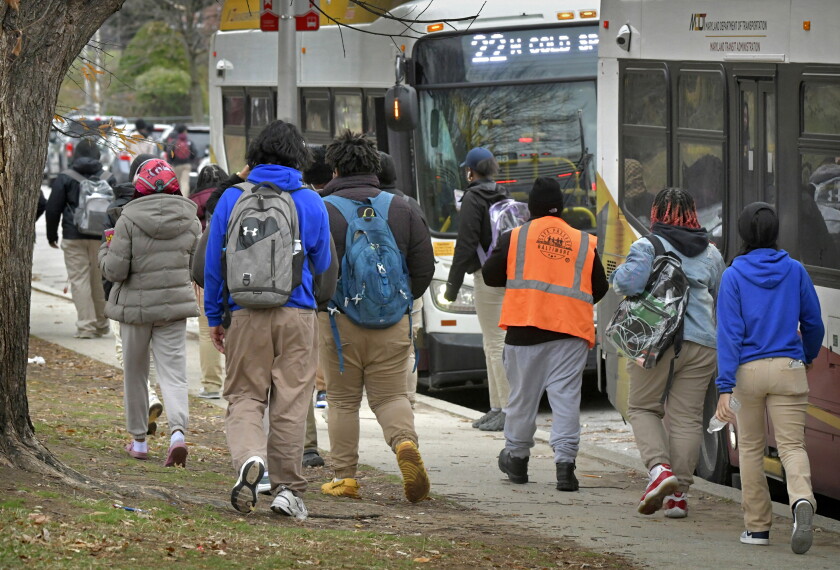
Yet our research also shows that too many parents face serious barriers to finding good schools. They report having trouble getting high-quality information to inform their choices, navigating different eligibility and application requirements, and finding adequate transportation.

Parents with the least education and those who have children with special needs report the most-significant barriers to the choice process.
A recent Detroit Free Press series exposed such problems in Detroit’s charter schools. Michigan’s choice system was designed to break up dysfunctional district monopolies as quickly as possible by creating many different statewide charter authorizers. But these entities, funded by fees from the schools they authorize, have little incentive to close low-performing schools. This has created a fragmented governance system in which no one agency has the incentive to care about all of the city’s students.
Charter advocates in Detroit take pride in the fact that charter schools outperform district schools as a whole, yet charters offer only marginal improvement over the single-digit proficiency rates in Detroit’s regular public schools. There are whole swaths of neighborhoods without a single high-performing district-run or chartered public school. The market is badly oversaturated with ineffective schools that are rarely closed by government agencies, and that children continue to attend because of transportation and information barriers like those reported in our survey. In places where parents are accustomed to fearing for their children’s safety, charters can prosper by being just a little more peaceful and caring than regular district schools.
While Detroit public school enrollment has declined precipitously since 2009, the district’s special education enrollment is climbing quickly because charter schools simply don’t offer the services those students need.
With numerous charter authorizers sponsoring schools, no single organization is accountable for ensuring that each school is performing well or that the market of options is functioning for families.
Detroit is an extreme example, but we are seeing these issues arise—to some degree—in other cities with a lot of choice. Charter and district sectors are often locked in a battle that hurts families. Too many students are falling through the cracks because advocates and policymakers are more focused on the fight between districts and charters than on making choice work for families.
When asked whether there should be a common enrollment system to ease application processes for families across the charter and district sectors, for example, one charter advocate in Washington explained his opposition this way: The market should be allowed to work freely, and we should “let the chips fall where they may.” Another charter supporter recently told us that charter schools should not have to take kids with special needs or severe behavior problems.
District officials can be just as self-interested, protecting their turf and refusing to share facilities and other city assets with high-performing charter schools that might serve a neighborhood better than the existing district school.
The promise of choice won’t be realized as long as we continue to carve up city schools into segments that mean nothing to students and their families.”
Addressing the systemic problems that cut across district and charter schools will not be easy. In our analysis, we found that high-choice city school systems are now governed by a patchwork of school districts, charter authorizers, charter management organizations, private schools, and other special-purpose agencies. This reality of fractured governance can make it difficult for city leaders to address cross-cutting issues that affect everyone, but are no one agency’s responsibility.
This doesn’t have to be the case. Policymakers and local leaders with real authority and leverage can and must push, pull, and motivate various actors so that citywide:
• Every neighborhood has great public school options.
• Children have safe passage and free or affordable transportation to schools.
• Families have access to information on all public schools so they can make good choices.
• Enrollment decisions are fair and transparent.
• Children and families facing the most challenges are given extra support and equitable access to good schools.
• Low-performing schools improve or are replaced with better options.
Government and nonprofit leaders in cities such as Baltimore, Cleveland, New Orleans, Washington, and even Detroit have been able to make progress toward these goals through voluntary agreements on citywide systems for enrollment and information to help families navigate public school choice. Other cities are finding ways to get promising new charter schools to locate in the neighborhoods that need them most.
In many cities, however, the situation is too dire to wait for people to come together voluntarily. In those cases, state leaders, mayors, and others need to change state and local laws to ensure that districts and charter authorizers oversee schools responsibly, and that families do not face significant barriers to choice, including inadequate transportation. In other cases, formal governance changes may be necessary to create a statewide entity that oversees authorizer actions and can revoke the right to charter. Some cities need specialized agencies or interagency agreements to oversee and administer citywide systems that facilitate choice.
In all of the cities we studied, public school choice has empowered parents, created new opportunities for better schools, and put pressure on the entire school system to improve.
But the promise of choice won’t be realized as long as we continue to carve up city schools into segments that mean nothing to students and their families. We need to elevate the nation’s vision of urban public education to include all public schools, charter and district-run alike.
Now that charter schools constitute large portions of many cities’ public schools, they can no longer act as an escape valve for the system. They now are the system. Charter advocates and state and civic leaders need to take responsibility for solving the problems of quality, equity, access, and protection of the disadvantaged that are the core responsibilities of public education.