It’s straight out of School Leadership 101: Public school officials should not receive personal benefits from companies that sell to their districts.
But, just as in private industry, where scandals have led to reviews of ethics rules, publicity about school officials who may have crossed ethical boundaries is renewing attention to such precepts.
Most recently, questions have been raised about connections between André J. Hornsby, the chief executive officer of the Prince George’s County, Md., system, and two companies that have made substantial sales of technology to the 139,000-student district.
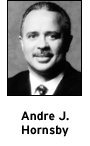
In July 2003, Mr. Hornsby took a trip to South Africa that was paid for by Bloomington, Minn.-based Plato Learning Inc., which makes computer-learning systems. He also reportedly has a live-in relationship with a saleswoman for LeapFrog SchoolHouse, which makes laptop-like educational devices and has made sales to the district.
Recent news stories about Mr. Hornsby by The Sun newspaper of Baltimore and The Washington Post have led some Maryland lawmakers to propose stricter reporting requirements for school officials, including board members.
Other ethical gray areas were highlighted this past summer by The Dallas Morning News, which reported that scores of district superintendents from around the country were being flown to resorts and being paid expenses and advisory fees by companies that sold to schools. Superintendents also moonlighted as well-paid consultants to companies, including some firms that sold to their own districts, the paper reported.
No Personal Benefit?
In Mr. Hornsby’s situation, which reportedly is being investigated by state and local officials, the 10-day trip to visit schools and colleges in South Africa happened one month after he came to work last year in the Prince George’s County schools. Under his leadership, the district has purchased $36,000 worth of Plato Learning products, and the company reportedly is competing for a much larger sale to the district.
A spokeswoman for Plato Learning, however, said the trip was paid for by one of two “scholarships” the company donated to the National Alliance of Black School Educators. At the time, Mr. Hornsby was the president of the Washington-based alliance, which organized the trip. It was the alliance that made the decision to give the scholarships to its president and its executive director, the spokeswoman said.
In published comments, Mr. Hornsby said his trip to South Africa was a professional activity that did not constitute a gift.
Several stories by The Sun and The Post have also documented the personal relationship between Mr. Hornsby and Sienna Owens, a saleswoman for LeapFrog SchoolHouse, which made a $1 million sale to the district in June.
Mr. Hornsby, in an ethics disclosure form filed Jan. 31, answered no to the question, “Is your spouse or any member of your immediate family employed by or affiliated in any manner with a business entity or person doing business with the board of education?”
Mr. Hornsby has said his relationship with Ms. Owens began before she was employed by the division of LeapFrog Enterprises, based in Emeryville, Calif. Her territory is in Virginia, not Maryland, according to news stories.
In response to a request from Education Week to interview Mr. Hornsby, Prince George’s district spokeswoman Kelly Alexander said he was not giving further interviews about the matter.
An official statement from the district, however, addressed the purchases of LeapFrog products. It said that the district has bought many LeapFrog products since early 2002, and that purchases of all instructional materials are based on extensive research and are “a group decision” of 22 school administrators. “All decisions are data-driven based on the product’s proven ability to improve student achievement,” the statement said.
Mr. Hornsby was fired from a previous job—the superintendency of the Yonkers, N.Y., district—in 2000 amid political controversy and questions of an ethical lapse.
Broader Disclosure
Policies on potential conflicts of interest and financial disclosure for school officials are common in districts, several experts said.
In the wake of the stories about Mr. Hornsby, some Maryland legislators are calling for more public information about school officials’ ties to businesses.
“It’s not just the state of Maryland. The more I look at the predatory contracting world out there, the more I see people willing to give out money [to school officials],” said James W. Hubbard, a legislator who represents Prince Georgia’s County in the Maryland House of Delegates.
Delegate Hubbard, a Democrat, said he was drafting a bill that would require every Maryland school board member, district superintendent, or other administrator who has the power to contract with vendors to make an annual filing on ethics concerns and financial disclosure to the Maryland State Ethics Commission.
Current law gives each school system a choice of whether to file with the state or establish its own ethics filing system, Mr. Hubbard said. “Most [districts] set up their own internal filing policy, it stays in their own internal file cabinet, and people don’t know how to look for it,” he said.
His bill would require school officials to sign forms under oath and have them notarized. They would be publicly available.
Massachusetts has “a very strict and zealously enforced ethics statute and conflict-of-interest law,” said Glenn Koocher, the executive director of the Massachusetts Association of School Committees, which represents school boards.
As a result, Mr. Koocher said, “we have very few ethics violations.” On the other hand, he said, many good prospective candidates who might seek school board seats “are reluctant to do so because they don’t want necessarily to report on their net worth” or business relationships.


